Make Orwell Fiction Again T shirt Iron on
Villains are the best. We may non dear them in our lives, merely they're often the all-time part of our literature—on account of their clear power, their refusal of social norms, and most chiefly, their power to make stories happen. Later all, if everyone was e'er nice and good and honest all the time, literature probably wouldn't even exist. To that end, below are a few of my favorites from the wide world of literary villainy. But what exactly does "best" mean when information technology comes to bad guys (and gals)? Well, it might mean whatsoever number of things here: most actually terrifying, or near compelling, or nigh well-written, or almost secretly dear by readers who know they are supposed to exist rooting for the white hats just just can't assistance it. It but depends on the villain. Think of these every bitnoteworthyvillains, if it clarifies things. This is not an exhaustive list, of form, and yous are more than invited to nominate your ain favorite evildoers in the comments section. By the way, for those of you lot who think that smashing books tin can exist spoiled—some of them might be below. After all, the most villainous oftentimes take quite a few pages to fully reveal themselves. The luminescence of Mitsuko (and the brilliance of this novel) is such that, fifty-fifty by the stop, you're not sure how much to despise her. She is such an expert manipulator, such a re-threader of the truth, that she is able to seduce everyone in her path (read: non but Sonoko but Sonoko's husband) and go them to like information technology. Including the reader, of course. In the end, Sonoko is still so devoted to her that the grand tragedy of her life is the fact that Mitsu did non allow her to die alongside her. Because the very worst villain is . . . become this . . . really inside you. As well, you lot merely savage asleep one time and when you woke up information technology was your evil id and non you? We've heard that one earlier. (So has Buffy.) Certain, Xan is also a villain in this novel. But the real, large-picture villain, the affair that causes everything to dissolve, and people to starting time christening their kittens and pushing them around in prams, has to exist the global disease that left all the men on earth infertile. A villain so villainous that (with the help of Steven Spielberg) it spawned a wave of shark paranoia amongst embankment-goers. In fact, Benchley, who as well wrote the screenplay for the flick, was then horrified at the cultural response to his work that he became a shark conservationist later in life. Take, have, take. This kid is the actual worst. A criminal mastermind— "the Napoleon of Criminal offence," equally Holmes puts it—and the only person to ever requite the good consulting detective any real trouble (other than himself). Though afterward countless adaptations, we now think of Moriarty as Holmes'due south main enemy, Doyle really only invented him equally a means to kill his hero, and he isn't otherwise prominent in the series. Moriarty has become bigger than Moriarty. The housekeeper so devoted to her dead ex-mistress that she's adamant to keep her retentivity live—by goading her boss'south new wife to jump out of the window to her death. That's 1 way to do it, I suppose. You could argue that it'southward Harry who corrupts Dorian, and James who stalks and tries to murder him, but therealsource of all this young hedonist's issues is his own self-obsession. Sometimes I like to think near what this novel would be like if someone wrote it today, with Dorian as a social media star. . . Few villains are quite so aggressively ugly as Uriah Heep (even the proper name! Dickens did not go in much for subtlety). When we first meet him, he is described as a "cadaverous" human, "who had hardly any eyebrows, and no eyelashes, and optics of a red-chocolate-brown, and then unsheltered and unshaded, that I remember wondering how he went to sleep. He was high-shouldered and bony; dressed in decent black, with a white wisp of a neckcloth; buttoned up to the throat; and had a long, lank, skeleton paw." Some Dickens scholars apparently call up that Heep was based on Hans Christian Andersen, in which case, mega burn—unless Andersen was into heavy metal. As "the most evil woman in creation," she is on a mission to torture and kill as many children as possible, and oftentimes uses murder as a focusing device in meetings. She's also kind of brilliant—I mean, murdering children by turning them into animals their parents want to exterminate? I have to say, that's smart. Cathy Ames is cold as ice—a sociopath who had to larn as a kid how to mimic feelings to get by—simply soon likewise learns how piece of cake information technology is to manipulate, destroy lives, and murder people to charm herself. Apparently all this is available to her because of her remarkable beauty. In the cease, she has a unmarried feeling of remorse and promptly kills herself. That'due south correct, I said information technology. Mired in cocky-compassion! Sullen and annoying! Dresses up equally a gypsy to mess with Jane's mind! Keeps his first wife locked in the attic! Thinks he can marry a nice girl like Jane anyway! Gaslights her constantly! Any. In Atwood's retelling of the Grimm fairy tale "The Robber Bridegroom," an evil temptress named Zenia steals the partners of three women (among many, ane presumes). Roz, Charis, and Tony, however, use their common hurt and hatred to grade a friendship—and unpack the many lies and revisions of herself Zenia has offered to each of them. Merely I can't really put it better than Lorrie Moore did in a 1993 review of the novel: Oddly, for all her inscrutable evil, Zenia is what drives this book: she is impossibly, fantastically bad. She is pure theater, pure plot. She is Richard III with breast implants. She is Iago in a miniskirt. She manipulates and exploits all the vanities and childhood scars of her friends (wounds left by neglectful mothers, an abusive uncle, absent dads); she grabs at intimacies and worms her way into their comfortable lives, so starts swinging a pickax. She mobilizes all the wily and beguiling art of seduction and ingratiation, which she has been able to utilize on men, and she directs it at women every bit well. She is an autoimmune disorder. She is viral, self-mutating, opportunistic (the narrative discusses her in conjunction with AIDS, salmonella and warts). She is a "man-eater" run amok. Roz thinks: "Women don't desire all the men eaten up past man-eaters; they want a few left over so they tin can eat some themselves." A cynical, manipulative, intelligent beauty with many artistic talents and a premium tin can-exercise mental attitude at her disposal. You've never met a more dedicated hustler. Past the finish, the novel seems to gauge her pretty harshly—simply I've e'er loved her. Oh, Henry—brooding, bright, bone-tired Henry. Some in the Lit Hub office argued that it was Julian who was the real villain in Donna Tartt'south classic novel of murder and declension, just I give Henry more credit than that. His villainy is in his carefulness, his coldness, his cocky-preservation at all costs. He is terrifying because nosotros all know him—or someone who could oh-so-easily slide into his long overcoat, i winter's dark. Isn't information technology crawly? We can just make dinosaurs! There is no foreseeable problem with this. We can totally handle information technology. Here's another novel with multiple candidates for Supreme Villain—should it be the Binewski parents, who purposefully poisonous substance themselves and their children in order to populate their freak show? Or should it be Mary Lick, a sort of mod millionaire version of Snow White's Evil Queen, who pays pretty women to disfigure themselves? I think we have to get with Arturo the Aqua Boy, the beflippered narcissist who grows into a cult leader, encouraging his followers to slowly pare away their body parts in a search for "purity." (But for the record, it'southward all of the above.) It'southward true that the monster is the murderer in Shelley's classic novel—and also, you know, a monster—but it's Dr. Frankenstein who decided he had to play God and build a beast in his ain epitome without thought to the possible ramifications! Shelley treats him as a tragic figure, just that only makes him a much more interesting villain. Made iconic by Anthony Hopkins, of grade, but fabricated vivid and terrifying—a serial killing psychiatrist cannibal, come on—past Thomas Harris. "They don't have a proper noun for what he is." Also, he has 6 fingers—though they're on his left hand, so information technology couldn't have been him who killed Mr. Montoya. However, information technology puts him in rare visitor. Did yous think the villain was the whale? The villain is non the whale—it's the megalomaniac at the helm. The villainess of choice for every man who has e'er claimed his wife made him do it. But I've always establish Lady Macbeth more interesting than Macbeth himself—she'due south the brains behind the operation, non to mention the ambition. Her sleepwalking scene is 1 of the all-time and almost famous of all of Shakespeare's plays. Fifty-fifty this makes me shiver: Out, damned spot! out, I say!—Ane: two: why, It may be the stray villagers who play a joke on the poor etymologist into the sand pit, but information technology is the sand itself that is the main antagonist in this slim and wonderful novel. The sand that keeps coming, and must be shoveled dorsum. The sand that constantly threatens to swallow everything: outset the man, then the woman, and then the hamlet—though one assumes the villagers would replace him before that happened. Sand. In everyone's favorite horror novel about America in the '50s, erstwhile bohemians Frank and April Wheeler motility to the 'burbs, and find information technology. . . extremely stifling. Only it'south not the suburbs exactly simply the Wheelers' disability to understand one another, their fear, their creeping, cumulative despair, that are the forces of devastation here. "The book was widely read as an antisuburban novel, and that disappointed me," Yates said in a 1972 interview. The Wheelers may have thought the suburbs were to blame for all their problems, simply I meant it to be implicit in the text that that was their mirage, their problem, not mine. . . I meant information technology more than equally an indictment of American life in the 1950s. Because during the fifties there was a general animalism for conformity all over this land, past no means only in the suburbs—a kind of blind, desperate clinging to safety and security at whatever price, equally exemplified politically in the Eisenhower assistants and the Joe McCarthy witch-hunts. Anyway, a neat many Americans were securely disturbed by all that—felt it to be an outright betrayal of our best and bravest revolutionary spirit—and that was the spirit I tried to embody in the character of April Wheeler. I meant the title to advise that the revolutionary road of 1776 had come to something very much like a dead end in the fifties. Fathers don't become much worse than David Melrose: cruel, brutal, and snobbish, a human being who enjoyed humiliating his wife, who raped his immature son, and who seemed to doom all those shut to him to a life of pain. You lot could also argue that the British Elite is the villain in the Patrick Melrose books, but . . . David is definitely worse (if slightly less all-encompassing). Here'due south a villain you can't help but root for—I mean, sort of. You feel his pain as he tries to allude himself into the life of the man he so admires (and perhaps loves), and every bit he is showtime welcomed and so pushed away. Less and so when he murders his beloved and assumes his identity—but somehow, as you read, you find yourself holding your breath effectually every corner, hoping he will escape yet again. As slaveowners go, Rufus isn't the worst (his begetter might rank) just he isn't the best, either. He's selfish and ignorant, and (like most men of the time) a cruel racist and misogynist, who doesn't mind raping women every bit long as they human action like they like information technology. Actually, the fact that he thinks he's better than his male parent actually makes him worse. That said, the real antagonist in this novel might actually be the unknown and unexplained forcefulness that keeps transporting Dana from her adept life in 1976 California to a Maryland slave plantation in 1815. What's that most? Large Nurse rules the patients of the aviary ward with an atomic number 26 fist. She is fond to order and power, and can be quite cruel in commanding it. In comes McMurphy, our hero, who wants to undercut her. He does undercut her, in fact, a number of times—only when he goes too far, she has him lobotomized. The end! I know Ratched is meant to be evil, and it's supposed to be depressing that she wins, but I can't aid merely sort of like the fact that after a homo chokes her half to expiry and rips off her shirt in an attempt to humiliate her (because no 1 with breasts can take power, you see!), she just has him put downwardly. Who isreallythe villain in Rachel Kushner's most recent novel? It can't be Romy; serving a life sentence for killing a man who was stalking her. Information technology can't be the human himself, who didn't quite understand what he was doing. It can't be whatever of the prisoners, nor whatsoever of the guards in item. Nor is this a book with no villain, because the pulsing sense of injustice is too great. Information technology is the whole thing, every aspect, of the American prison organisation—meant to take hold of you and bleed you and keep you lot and bring you lot back—that is the true villain in this novel (and oftentimes, in existent life). Of course it'due south O'Brien who does nearly of the dirty work—but it's Big Brother (exist he actual person or nebulous invented concept) that actually, um, oversees the evil here. He'southward a shallow, narcissistic, greedy investment banker, and also a racist, a misogynist, an anti-Semite and a homophobe, and also a sadist and a murderer and a carnivorous and Huey Lewis devotee. He's also weirdly pathetic. Can't really get whatsoever worse than that every bit a person—but equally a character, he'southward endlessly entertaining. Information technology's José Ignacio Saenz de la Barra who is the almost bloodthirsty, but the unnamed General (of the Universe) who is the most compelling villain in this novel: an impossibly long-lived tyrant who has borderline-magical control over the populace, and even the landscape, whose roses open early on because, tired of darkness, he has declared the fourth dimension inverse; who sells away the ocean to the Americans. He is desperately unhappy; he considers himself a god. Luckily, we get to spend almost the entire novel within his twisting encephalon. The genius of sometime Hum is how compelling he is—that is, despite the horrible affair he spends the entire novel doing (kidnapping a young girl whose female parent he has murdered, driving her around the country and coaxing her into sexual acts, self-flagellating and cocky-congratulating in equal measure out), yous are charmed by him, half-convinced, fifty-fifty, by his 1000 old speeches nearly Eros and the power of language. In the end, of course, no corporeality of fancy prose fashion is enough to make yous forget that he'due south a murderer and worse, but for this reader, information technology'south pure pleasure getting in that location. The slave-hunting Ridgeway, Whitehead writes, "was six and a half feet tall, with the square face and thick neck of a hammer. He maintained a serene comportment at all times but generated a threatening atmosphere, similar a thunderhead that seems far away simply then is all of a sudden overhead with a loud violence." He'south a little more interesting and intelligent than a simple brute—in function due to that sidekick of his—which merely makes him more than frightening every bit a graphic symbol. Tom Hardy is a shoo-in for the accommodation. Listen: Annie Wilkes is a fan. She's a big fan. ShelovesPaul Sheldon's novels about Misery Chastain, and she is devastated to discover—subsequently rescuing Sheldon from a auto wreck—that he has killed off her beloved graphic symbol. Things do non and so go well for Paul, because as it turns out, Annie is already a seasoned serial killer who is very handy (read: murderous) with household objects. The government that has taken control of America in the world of Atwood's classic dystopia is a fundamentalist theocracy whose leaders have eliminated the purlieus between church and state—and worse, have twisted religious principles and political power in an try to utterly subjugate all women, erasing their identities and allowing them to exist only and then far equally they may exist of utilize to the state. It is super fucked up and exactly what I worry about in a country where fundamentalists accept any amid of political power. Information technology's pretty hard to fight back when the thing you're fighting is the earth itself, which punishes those who walk upon it with extreme, years-long "seasons" of dramatic and mortiferous climate change. Ah, Evil Earth! The worst villain is the i who knows you best—the 1 you lot might even love. The scariest motive is the lack of one—what Coleridge called Iago's "motiveless malignity." The well-nigh interesting villain is the ane who has fifty-fifty more lines than the titular hero. He is a fantastic villain, a dangerous trickster, whose character has stumped (and intrigued) critics for centuries. Possibly the most terrifying graphic symbol in modern literature (or any literature?), Glanton'southward deputy is over six feet tall and completely hairless. More importantly, despite the fact that he might be a genius, he inflicts senseless and remorseless violence wherever he goes. The man murders (and, it is suggested, rapes) children and throws puppies to their doom. He might actually be the devil—or simply evil itself.He never sleeps, the gauge. He is dancing, dancing. He says that he will never dice. This entire novel is based on a single idea: that a loving mother might murder her baby daughter to save her from life every bit a slave. Certain, the slavers are bad (and the schoolteacher is particularly chilling). Sure, you could make an argument that the vengeful spirit Beloved's presence is destructive, splintering farther an already fractured family. Only these are but symptoms, in this the Great American Novel, of the Not bad American Sin. The obligatory first place in the scheme of literary evildoers: Satan himself. Though honestly, as depictions of the devil go, Dante's is somewhat less than fearsome—not least because he too must endure all the pains and indignities of Hell, tortured and torturing, crying from all 6 of his eyes as he chomps on Judas Iscariot. Mitsuko,Quicksand, Junichiro Tanizaki
 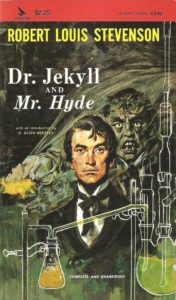 Mr. Hyde,The Strange Case of Dr. Jekyll and Mr. Hyde, Robert Louis Stevenson
 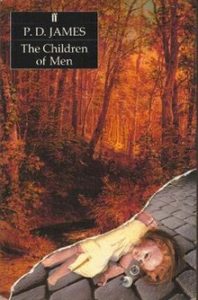 Infertility, The Children of Men, P. D. James
 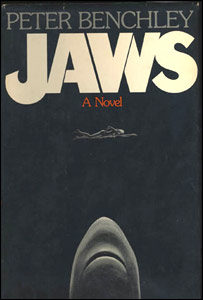 The shark,Jaws, Peter Benchley
 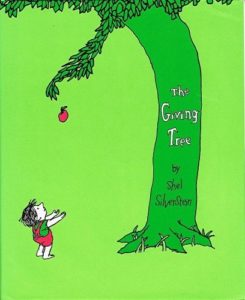 The kid, The Giving Tree, Shel Silverstein
 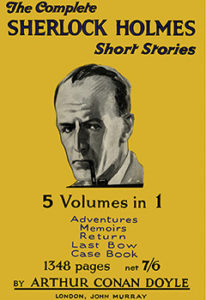 Professor Moriarty, "The Final Problem," Sir Arthur Conan Doyle
 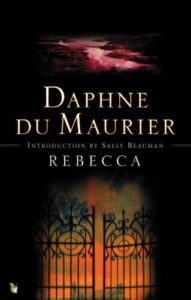 Mrs. Danvers, Rebecca, Daphne du Maurier
 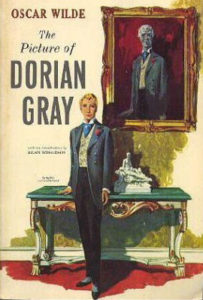 Vanity,The Picture of Dorian Grayness, Oscar Wilde
 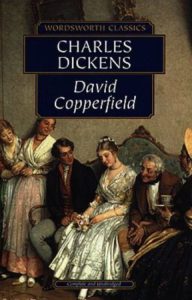 Uriah Heep, David Copperfield, Charles Dickens
 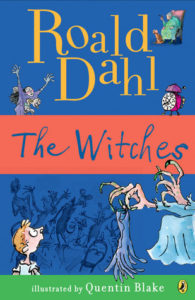 The Grand Witch, The Witches, Roald Dahl
  Cathy Ames,East of Eden, John Steinbeck
  Mr. Rochester, Jane Eyre, Charlotte Brontë
 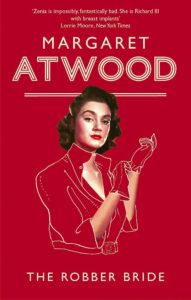 Zenia, The Robber Bride, Margaret Atwood
 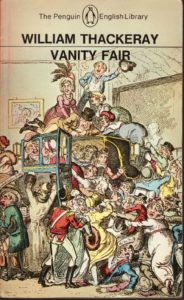 Becky Sharp, Vanity Fair, William Makepeace Thackeray
 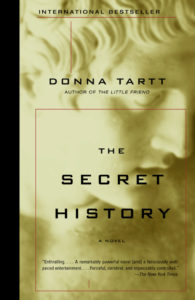 Henry, The Secret History, Donna Tartt
 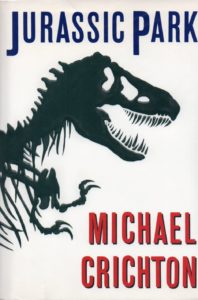 Hubris, almost all of literature just let's go with Jurassic Park, Michael Crichton
 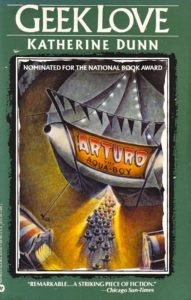 Arturo, Geek Love, Katherine Dunn
 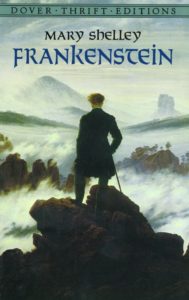 Dr. Frankenstein,Frankenstein, Mary Shelley
 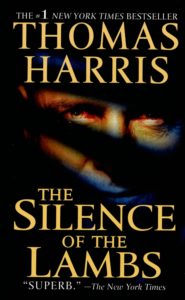 Hannibal Lecter, Ruby Dragon, The Silence of the Lambs, etc., Thomas Harris
 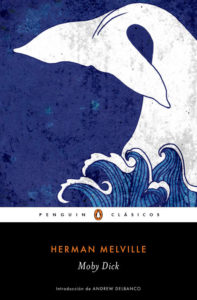 Helm Ahab,Moby-Dick, Herman Melville
 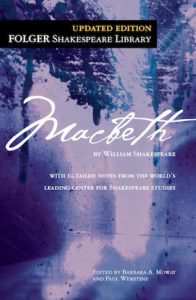 Lady Macbeth,Macbeth, William Shakespeare
so, 'tis fourth dimension to do't.—Hell is murky!—Fie, my
lord, fie! a soldier, and afeard? What need we
fear who knows information technology, when none tin can call our ability to
business relationship?—Yet who would have idea the old man
to have had so much blood in him.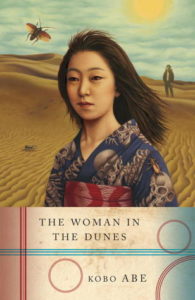 Sand, The Woman in the Dunes, Kobo Abe
 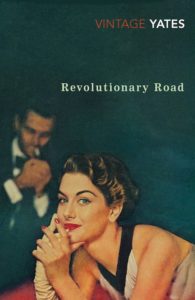 Suburban Ennui, Revolutionary Road, Richard Yates
 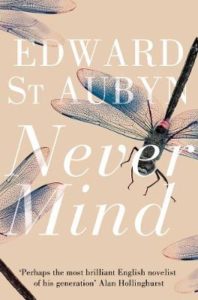 David Melrose, Never Heed, Edward St. Aubyn
 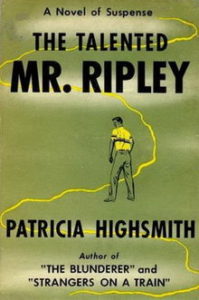 Tom Ripley, The Talented Mr. Ripley, Patricia Highsmith
 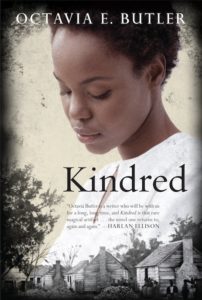 Rufus Weylin, Kindred, Octavia Butler
 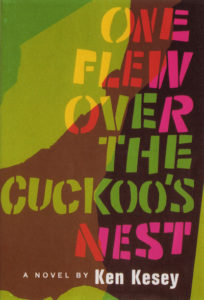 Nurse Ratched, Ane Flew Over The Cuckoo's Nest, Ken Kesey
 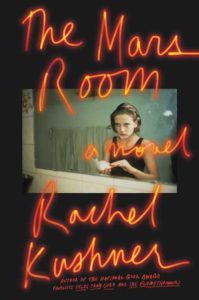 The Prison-industrial complex, The Mars Room, Rachel Kushner
 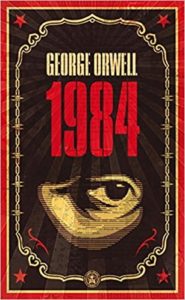 Large Brother,1984, George Orwell
 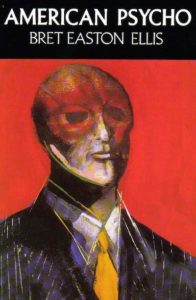 Patrick Bateman, American Psycho, Bret Easton Ellis
 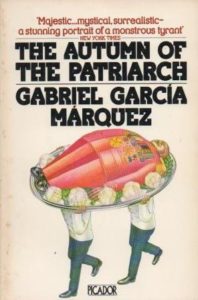 The General, The Autumn of the Patriarch, Gabriel García Márquez
 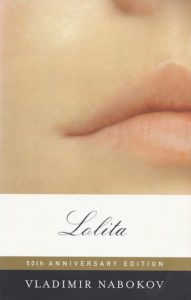 Humbert Humbert, Lolita, Vladimir Nabokov
 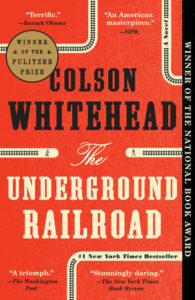 Ridgeway, The Undercover Railroad, Colson Whitehead
 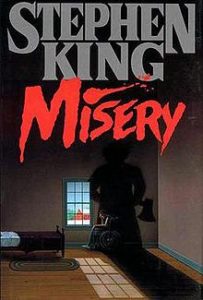 Annie Wilkes, Misery, Stephen King
 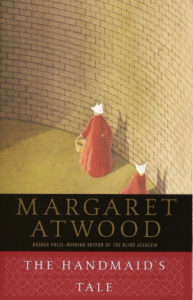 The Democracy of Gilead, The Handmaid's Tale, Margaret Atwood
 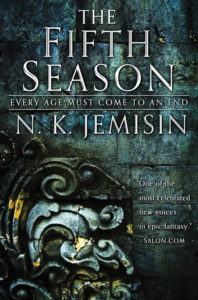 The Earth, The Broken Earth series, N. M. Jemisin
 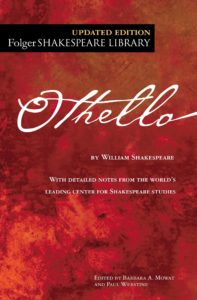 Iago, Othello, William Shakespeare
 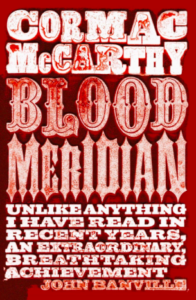 Judge Holden, Blood Meridian, Cormac McCarthy
 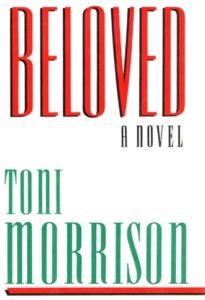 Slavery,Dear, Toni Morrison
  Satan, The Divine Comedy, Dante Alighieri
richardsonarecow83.blogspot.com
Source: https://lithub.com/40-of-the-best-villains-in-literature/

Post a Comment for "Make Orwell Fiction Again T shirt Iron on"